
Key Takeaways
- Rapid weight loss from GLP-1 medications like Ozempic often leads to hair loss, a condition known as telogen effluvium.
- Research shows a significant link between higher doses of semaglutide and increased hair shedding.
- The body undergoes metabolic stress during quick weight loss, prompting hair follicles to enter the shedding phase.
- Treatment involves understanding nutrient deficiencies and correcting them rather than stopping the medication.
- Recovery from hair loss on Ozempic typically occurs within 6–12 months after addressing underlying nutritional needs.
Estimated reading time: 10 minutes
You’re losing weight. You’re also losing hair. And nobody warned you.
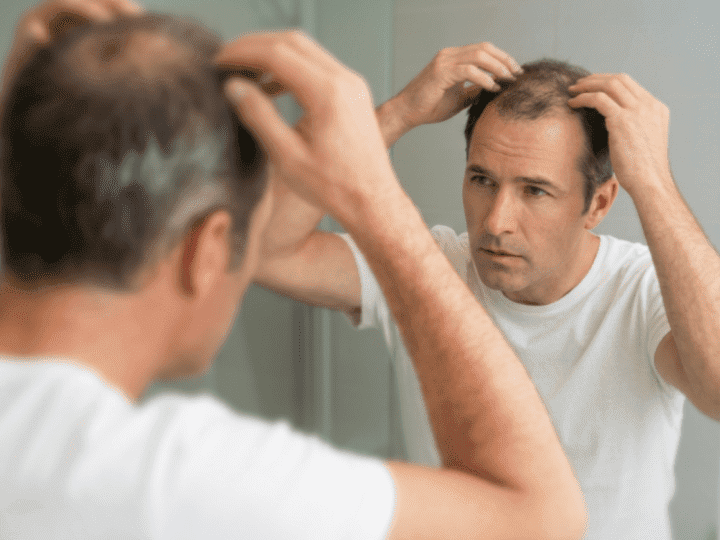
It starts in the shower drain. Then the pillowcase. Then you’re running your fingers through your hair and coming away with more than you’re used to. You Google it and find thousands of people saying the same thing — but not much in the way of a real explanation, and almost nothing about what to do.
I’m Dr. Darrell Kilcup. I’ve been practicing functional medicine in Phoenix for over 35 years. I’m seeing more patients walk in with this exact picture: the weight is coming off on a GLP-1, but so is their hair. Here’s what the research actually says, why it’s happening, and what a proper workup looks like.
It’s not in your head. The research confirms it.
This is not a fringe complaint. A 2026 systematic review in Science Progress analyzed 24 studies and found that semaglutide and tirzepatide — the active ingredients in Ozempic, Wegovy, Mounjaro, and Zepbound — had the highest incidence of hair loss among all GLP-1 medications. The association appeared dose-dependent: doses below 2 mg weekly were rarely implicated, while the higher doses used for weight loss were more commonly linked to shedding.
A separate systematic review in the International Journal of Dermatology looked at over 626,000 patients on GLP-1 medications and found that about 1.6% experienced hair loss — with semaglutide showing reporting odds ratios as high as 2.46 in FDA adverse event data. That may sound small, but it’s statistically meaningful, and for the person pulling clumps out of a brush, percentages aren’t the point.
And in 2025, the first large real-world cohort study using the TriNetX US Collaborative Network — covering 67 healthcare organizations — confirmed the association independently. GLP-1 users had significantly higher rates of telogen effluvium and androgenetic alopecia compared to matched controls who weren’t on the drugs.
This is real. It’s documented. And it’s becoming more common as these medications become more widely prescribed.
The mechanism: your body thinks it’s under siege
Here’s what’s happening biologically. It’s called telogen effluvium — and understanding it is the first step toward fixing it.
Your hair grows in cycles. At any given time, most of your hair is in the growth phase (anagen), and a small percentage is resting and preparing to shed (telogen). Normally, only about 5–10% of your hair is in telogen at once, and shedding is invisible.
Telogen effluvium is what happens when your body shifts a large number of follicles from growth to shedding at the same time. The trigger is metabolic stress — and rapid weight loss is one of the most well-documented forms of metabolic stress there is.
When you lose weight quickly on a GLP-1, several things happen at once:
- Your calorie intake drops dramatically. GLP-1 medications suppress appetite, often severely. Patients frequently go from a normal caloric intake to eating far less — sometimes dangerously less — without realizing the nutritional consequences. Your hair follicles are among the most metabolically active cells in your body. When the supply line gets cut, they’re among the first to shut down.
- Your nutrient stores get depleted. Iron, ferritin, zinc, vitamin D, B12, biotin, and protein are all critical for hair growth. Months of eating significantly less means months of taking in less of all of them. A comprehensive biochemical analysis of telogen effluvium patients found significant associations with deficiencies in ferritin, vitamin D, zinc, and B12 — exactly the nutrients that get stripped by prolonged caloric restriction.
- Your thyroid may downregulate. The thyroid is exquisitely sensitive to caloric deficit. When energy intake drops, the body slows thyroid conversion to conserve resources — and one of the first visible signs of low thyroid function is hair loss. This is the same mechanism I described in my article on why you feel terrible after losing weight on a GLP-1 — and hair thinning is often the canary in that coal mine.
- The weight loss itself is a trigger. Even if your nutrients were perfect — which they almost certainly aren’t — the sheer speed and magnitude of weight loss can push follicles into telogen. This is why hair loss after bariatric surgery has been well documented for decades. GLP-1-driven weight loss is producing the same metabolic stress in a different vehicle.
There’s also an emerging question about whether GLP-1 receptors in hair follicles play a direct role. Mouse studies have identified GLP-1 receptor expression in follicular tissue, raising the possibility that the drugs themselves may influence the hair cycle independent of weight loss. The Journal of the European Academy of Dermatology and Venereology flagged this as a plausible contributing mechanism, but human data are still lacking. For now, the strongest drivers appear to be rapid weight loss and nutritional depletion — both of which are measurable and fixable.
The timing tells you something important
Most patients notice increased shedding 2–4 months after starting or dose-escalating a GLP-1. That delay is characteristic of telogen effluvium: the stressor (caloric deficit, nutrient depletion, rapid weight change) pushes follicles into the resting phase, and it takes 2–3 months for those follicles to shed. By the time you notice the hair loss, the damage was done weeks or months earlier.
This timing matters because it also predicts recovery. Once the underlying stress is resolved — once the nutrient depletions are corrected, protein intake is adequate, and the metabolic environment stabilizes — most patients see recovery within 6–12 months. The International Society of Hair Restoration Surgery reports that roughly 95% of telogen effluvium cases resolve fully within 2–3 months of removing the triggering stressor.
But here’s the key: the stressor has to actually be removed. If you’re still depleted, still under-eating protein, still running low on iron and zinc — the shedding continues. The clock doesn’t start until the cause is addressed.
What a proper workup looks like
The standard response from most prescribers is “hair loss is a known side effect” or “it usually resolves on its own.” Both statements are technically true and practically useless — because they don’t identify what’s driving your hair loss or do anything to speed recovery.
A proper workup starts with labs:
Iron and ferritin. Serum iron alone isn’t enough. Ferritin — your stored iron — is the marker that matters for hair. Research suggests that ferritin levels should be above 40–70 ng/mL for optimal hair growth, and many GLP-1 patients are well below that after months of reduced intake.
Zinc. Zinc deficiency is directly linked to telogen effluvium and is common in caloric restriction. Most prescribers never check it.
Vitamin D. Vitamin D plays a role in hair follicle cycling. Deficiency is already endemic in the general population — layer caloric restriction on top and it gets worse.
B12 and folate. Both are involved in cell turnover and hair growth. Both drop when dietary intake drops.
Thyroid panel. Not just TSH — a full panel including free T3 and free T4. Caloric restriction can suppress thyroid conversion without moving TSH out of the “normal” range, and that subclinical downregulation is enough to thin your hair.
Protein and amino acid status. Your hair is made of protein. If you’re not eating enough of it — and most GLP-1 patients aren’t — your body triages, and hair loses.
Comprehensive metabolic markers. Hormones, blood sugar regulation, inflammatory markers. Hair loss is rarely just one thing — it’s usually the visible tip of a broader depletion pattern.
Once you know what’s depleted, you fix it. That’s targeted nutrient repletion, not a Costco multivitamin. It’s correcting deficiencies at therapeutic doses, under monitoring, with follow-up labs to confirm repletion — because guessing doesn’t work and over-supplementing creates its own problems.
What recovery actually looks like
I want to be clear about expectations. Hair recovery from telogen effluvium is real, but it takes time. You are not going to see results in two weeks.
Here’s the general timeline once the underlying depletions are corrected:
Shedding slows within 2–4 weeks of adequate nutrient repletion and protein intake. New growth begins appearing within 2–3 months. Visible density improvement typically takes 6–12 months. Full recovery — meaning your hair looks and feels like it did before — can take up to a year.
The variables that affect speed of recovery are the ones we measure and manage: how depleted your stores were, how quickly they’re repleted, whether thyroid function has normalized, whether you’re getting adequate protein, and whether any additional stressors (hormonal changes, ongoing medication effects) are still in play.
For local patients, we can add photobiomodulation (red-light therapy) to the recovery protocol. Low-level light therapy has shown promising results for stimulating follicles and supporting regrowth, particularly when combined with nutrient correction. It’s not a replacement for fixing the underlying depletions — nothing is — but it can support the process.
The deeper issue: hair loss is usually not the only problem
This is the part most people miss. If your hair is falling out on a GLP-1, your hair is not the problem. Your hair is the symptom.
The same depletions that cause telogen effluvium — iron, zinc, D, B12, protein, thyroid suppression — are the same ones causing the fatigue, the brain fog, the weakness, the flat mood, and the exercise intolerance that so many GLP-1 patients report. I wrote about this in detail in why you feel terrible after losing weight on a GLP-1. Hair thinning is often the most visible sign of a depletion pattern that’s affecting everything.
Which means the workup that finds out why your hair is falling out is the same workup that explains why you’re exhausted. And the plan that restores your hair is the same plan that restores your energy, your strength, and your metabolic health.
That’s not a coincidence. It’s how the body works.
You don’t have to stop the medication
I want to be direct about this, because it’s the first thing patients ask: you do not necessarily have to stop your GLP-1 to address the hair loss. The goal is to identify and correct the depletions that are driving it — not to take away a medication that may be working for you.
In many cases, the answer is better nutritional management while on the medication: hitting your protein targets, correcting specific deficiencies with targeted supplementation, monitoring thyroid function, and tracking labs to make sure repletion is actually happening. This is what co-management looks like — we work alongside your prescriber, not against them. You keep your medication. We handle what the medication doesn’t.
For patients who have already stopped their GLP-1 and are dealing with hair loss as part of a broader post-medication picture — weight regain, fatigue, metabolic slowdown — the approach is the same: labs, depletions, targeted correction, monitoring. I covered the regain side in detail in weight coming back after stopping Ozempic.
The bottom line
Your hair is not falling out because something is wrong with you. It’s falling out because something was missing from the plan — and it’s fixable.
A GLP-1 is a tool. A good one. But a tool that suppresses your appetite without managing what that means for your nutrition, your nutrients, your thyroid, and your hair is only doing half the job. The other half is the workup, the labs, and the targeted correction that makes sure the weight you’re losing doesn’t cost you the things you weren’t willing to give up.
That second half is what we do here.
Dr. Darrell Kilcup, DC, CFMP practices functional medicine in Phoenix, Arizona. If you’re experiencing hair loss on or after a GLP-1 medication and want to find out what’s actually driving it, you can start as a new patient or call (602) 864-0304 with questions. Out of state? The lab workup and nutrition coaching can be done remotely — call to ask about phone and video visits.
Related reading:
 In Office
 By Phone
 Google 5.0


