
Key Takeaways
- Many patients feel worse after losing weight on Ozempic due to muscle loss, nutrient depletions, and hormonal disruptions.
- GLP-1 medications suppress appetite effectively but do not manage muscle mass, nutrients, or metabolism, leading to fatigue and weakness.
- Essential lab tests, including comprehensive thyroid and hormone panels, are often overlooked in standard GLP-1 prescribing models.
- A body-composition assessment, such as a DEXA scan, is crucial to understand how weight loss affected muscle and fat levels.
- Proper management can reverse negative effects; patients often feel better within 6-8 weeks of targeted repletion and nutrition optimization.
Estimated reading time: 10 minutes
Why You Feel Terrible After Losing Weight on a GLP-1
You hit your goal weight — or close to it. And you feel worse than when you started.
Exhausted. Weak. Flat. Your hair is thinning. Your workouts feel like someone turned the gravity up. You’re cold all the time. Your mood is somewhere between numb and irritable. You look at the number on the scale and it says you won — but your body says something went wrong.
You’re not imagining it. Something did go wrong. Not with the drug itself, necessarily — but with everything that was supposed to happen around the drug and didn’t.
I’m Dr. Darrell Kilcup. I’ve been practicing functional medicine in Phoenix for over 35 years. I’m seeing more and more patients walk in with exactly this picture: weight is down, energy is gone, and nobody has explained why. Here’s what’s actually happening.
The drug did its job. Nobody did the rest.
GLP-1 medications — Ozempic, Wegovy, Mounjaro, Zepbound — are effective at one thing: suppressing appetite. They do that well. The weight comes off.
But appetite suppression means you ate a lot less for months. And when you eat a lot less, several things happen at once:
- You lose fat. But you also lose muscle — and the ratio matters more than most prescribers acknowledge.
- You take in fewer nutrients. Not because the drug blocks absorption (it doesn’t, for most nutrients), but because you’re simply eating far less food. Less food means less iron, less zinc, less B12, less magnesium, less vitamin D, less protein.
- Your thyroid adjusts. When the body senses prolonged caloric restriction, it dials back metabolic rate. Free T3 drops. Reverse T3 climbs. You get colder, slower, more fatigued.
- Your hormones shift. Rapid fat loss disrupts sex hormone production. Testosterone, estrogen, DHEA — all of these can move in ways that affect mood, energy, and recovery.
None of this is a mystery. It’s basic physiology. The problem is that the typical GLP-1 prescribing model — especially the telehealth version — hands you the prescription, maybe a pamphlet about nausea, and nothing else. No labs. No body-composition monitoring. No protein targets. No nutrient tracking. No plan for what happens when the drug stops working or you decide to stop taking it.
That gap between what the drug does and what the drug doesn’t do is the entire reason you feel terrible right now.
What actually goes wrong — and what the labs show
Let me walk through what I typically find when these patients come in for a functional medicine workup.
Muscle loss you can’t see on a scale
The scale doesn’t distinguish between fat and muscle. It just gives you a number. But the composition of what you lost determines how you feel, how you function, and whether the weight stays off.
Clinical trial data shows that a meaningful fraction of the weight lost on GLP-1 medications is lean mass — not fat. A focused review in Circulation found that lean mass loss ranged from 25% to as high as 45% of total weight lost across major trials, depending on the drug and measurement method. The exact proportion varies by study, drug, dose, and duration, and the research on whether this degree of muscle loss is harmful long-term is genuinely still evolving. But here’s what isn’t debatable: if you lost a significant amount of muscle, your metabolic rate dropped, your strength dropped, and your body’s capacity to regulate blood sugar on its own dropped with it.
This matters more for some people than others. If you’re over 50, postmenopausal, or started with relatively low muscle mass to begin with, the impact of lean-mass loss is amplified. These are the patients I worry about most, because they had less margin to begin with.
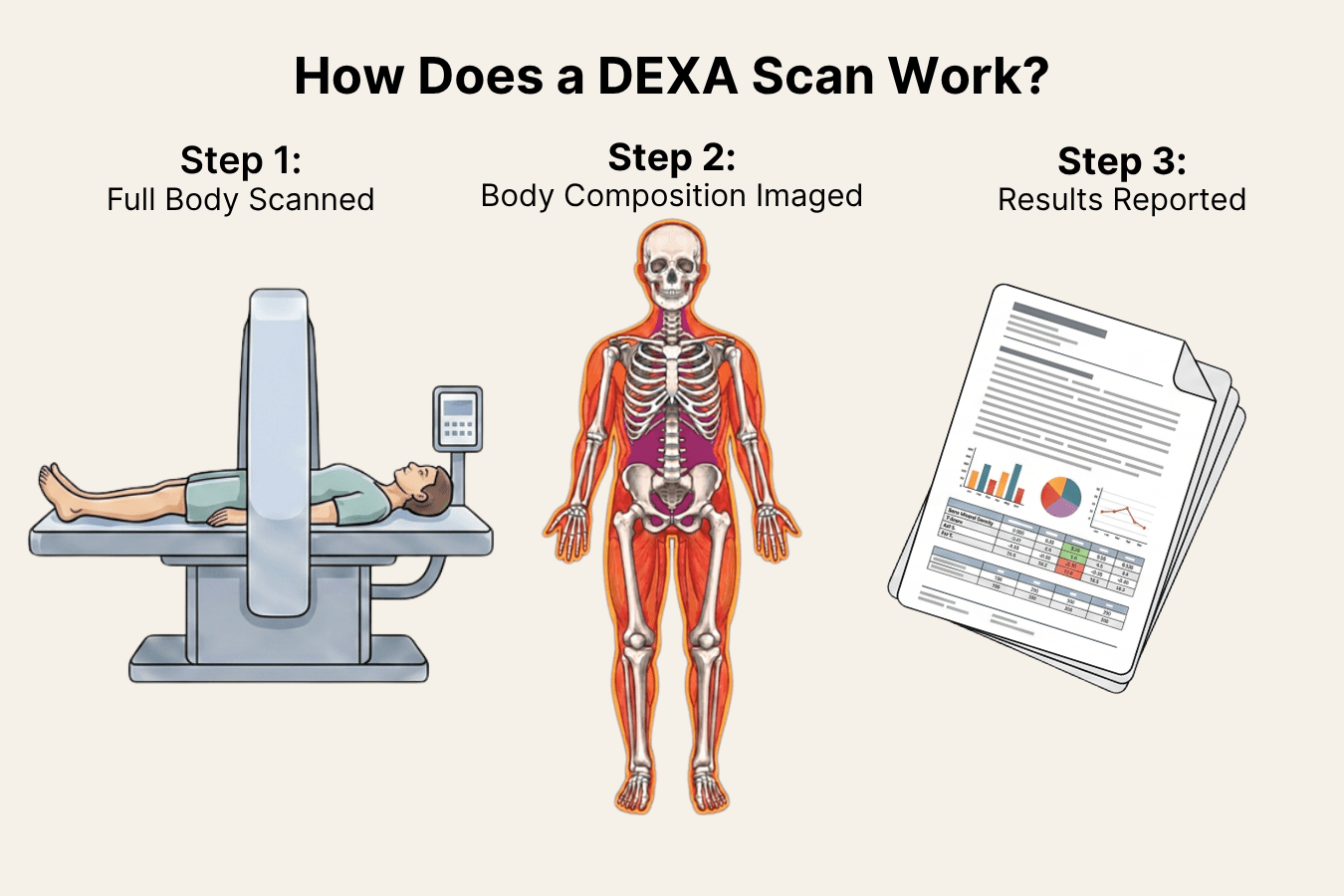
The only way to know what you actually lost is a body-composition test — ideally a DEXA scan. Not a BMI calculation, not a bioimpedance scale from Amazon. A real measurement of fat mass versus lean mass. If your prescriber never ordered one, you’ve been flying blind.
Nutrient depletions that build up quietly
A 2026 narrative review in Clinical Obesity looked at data from over 480,000 adults on GLP-1 therapy and found that micronutrient deficiencies are a common consequence, not a rare adverse event. Vitamin D deficiency was the most frequent finding — 7.5% at six months, rising to 13.6% at twelve months. GLP-1 users showed 26–30% lower ferritin levels than comparators on other diabetes medications.
A separate review in Nutrients found that more than 60% of GLP-1 users consume below estimated requirements for calcium and iron, and their vitamin D intake averages roughly 20% of what’s recommended.
The mechanism isn’t mysterious: when your appetite is suppressed and you’re eating 800–1,200 calories a day, it’s nearly impossible to hit your nutrient targets through food alone. The nutrients most commonly depleted include:
- Iron and ferritin — fatigue, brain fog, hair loss, exercise intolerance
- Vitamin D — fatigue, bone health, immune function, mood
- B12 — neurological symptoms, fatigue, cognitive changes
- Zinc — immune function, hair and skin health, taste changes
- Magnesium — muscle cramps, sleep disruption, anxiety, fatigue
- Thiamine (B1) — in severe cases of caloric restriction combined with vomiting, depletion can become dangerous
These don’t announce themselves with a single dramatic symptom. They accumulate. You get a little more tired. Your hair starts thinning — a 2026 systematic review confirmed that semaglutide and tirzepatide carry the highest incidence of hair loss among GLP-1 medications, primarily through telogen effluvium triggered by rapid weight loss and nutrient depletion. Your workouts get harder. Your mood flattens. By the time you connect the dots, the depletions have been building for months.
Thyroid downregulation
Your thyroid is an engine governor. When the body senses sustained caloric restriction, it protects itself by slowing down. Free T3 — the active thyroid hormone — drops. Reverse T3 — the brake pedal — climbs. The result is a lower metabolic rate, lower body temperature, fatigue, constipation, dry skin, and a general sense of sluggishness that patients describe as “feeling like I’m moving through mud.”
Research has shown that semaglutide treatment significantly alters thyroid hormones and TSH levels, and that some of these changes don’t fully reverse after stopping the drug. A study of 290 adults in the GAROS trial found that free T3 dropped significantly during three months of semaglutide, and that fT3 and fT4 did not fully return to baseline even three months after discontinuation. A standard TSH-only test from your PCP will often come back “normal” because it doesn’t capture the full picture. You need free T3, free T4, and reverse T3 at minimum to see what’s actually happening.
Hormonal disruption
Rapid fat loss affects hormone production. Adipose tissue is metabolically active — it plays a role in estrogen metabolism, testosterone conversion, and cortisol regulation. Lose a large amount of fat quickly and the hormonal landscape shifts with it.
Women may notice cycle changes, worsened PMS, mood shifts, or worsened menopausal symptoms. Men may notice lower libido, reduced motivation, and slower recovery. Both may notice that their stress tolerance has cratered.
None of this gets checked in a standard telehealth GLP-1 follow-up. It should.
And these problems don’t end when the drug stops. The STEP 1 extension trial found that within one year of stopping semaglutide, participants regained two-thirds of their prior weight loss — and the weight that comes back is predominantly fat, not the muscle that was lost. A 2026 editorial in Cureus called this “sarcopenic obesity” — a state where you’re heavier again but with less muscle than you started with. That’s the compounding problem: the nutritional and hormonal damage accumulates during treatment, and if it’s not addressed before or during discontinuation, the rebound makes it worse.
Why your prescriber didn’t catch this
This isn’t really an indictment of your prescriber. It’s a structural problem.
The GLP-1 prescribing model — especially through telehealth — is built for scale. See a patient, verify eligibility, write the prescription, manage the dose titration, handle nausea. That’s the scope. It’s not designed to run comprehensive labs, track body composition, manage nutrition, or build an off-ramp plan for when the medication ends.
Your PCP may be willing to help, but the standard visit doesn’t have time for a deep metabolic workup, and insurance-driven lab panels are limited to a handful of markers that don’t capture what’s happening to someone on aggressive caloric restriction.
The result is a gap. The drug does its job. Everything else — muscle, nutrients, thyroid, hormones, metabolism, a plan for what comes next — falls through the crack.
What a proper workup looks like
When a patient like you walks into my office, here’s what we’re doing:
- Comprehensive labs. Not a basic metabolic panel. A full thyroid panel including free T3, free T4, and reverse T3. Fasting insulin and HbA1c. A complete iron panel with ferritin. B12, folate, RBC magnesium, zinc, vitamin D. Inflammatory markers. Homocysteine. And if the clinical picture warrants it — which it often does — a full hormone panel: testosterone, DHEA-S, estradiol, cortisol.
- Body-composition assessment. DEXA scan to separate fat mass from lean mass. This tells us exactly what you lost, what you kept, and where the rebuild needs to happen.
- A real nutrition plan. Not a generic calorie target. A protein-first plan built for your actual lean mass, your metabolic rate, and the specific depletions showing up in your labs. This is the part that protects what you have left and starts rebuilding what you lost.
- Targeted repletion. Based on what the labs show, not a guess. If your ferritin is at 15, we’re not waiting for it to get to 5. If your D is at 22, we’re not calling that “low normal” and ignoring it. We replete what’s depleted, monitor the response, and adjust.
- A conversation about what comes next. Whether you’re still on the medication, tapering off, or already stopped — we build a plan around your actual situation. The goal is to make sure the weight you lost stays lost, the muscle comes back, and you feel like yourself again.
This is what a functional medicine practice is built for — and it’s the part the prescribing model leaves out. If you’re ready to find out what’s actually going on, you can start as a new patient here or call (602) 864-0304.
This is fixable
That’s the part I want you to hear clearly. What you’re experiencing right now — the fatigue, the weakness, the thinning hair, the flat mood — is not permanent, it’s not in your head, and it’s not the price you pay for losing weight. It’s what happens when weight loss isn’t managed properly, and it responds to proper management.
The labs tell us exactly what’s going on. The treatment plan addresses it. Most patients start feeling meaningfully better within 6–8 weeks of beginning targeted repletion and nutrition optimization. The muscle takes longer — rebuilding lean mass is a months-long process — but even that trajectory is trackable and predictable.
You did the hard part. You lost the weight. The part that comes next — feeling strong, energetic, and healthy at your new weight — is what we do here.
If you recognize yourself in this — the exhaustion, the weakness, the sense that something is off even though the scale says you succeeded — the next step is a real workup. Not a guess, not another pamphlet. Labs that show exactly what’s depleted, body composition that shows exactly what you lost, and a plan to put it back.
Start as a new patient | Call (602) 864-0304
Not in Phoenix? The lab workup and nutrition coaching can be done by phone or video. Call to ask about remote visits.
Dr. Darrell Kilcup, DC, CFMP has practiced functional medicine in Phoenix, Arizona for over 35 years.g, you can start as a new patient or call to talk it through. Out of state? The lab workup and nutrition coaching can be done remotely — call (602) 864-0304 to ask about phone and video visits.
Related reading:
- Adrenal Fatigue can make you FAT, TIRED, LIBIDO-LESS, CONSTIPATED AND SICK
- Iodine for Hypothyroidism | A Functional Medicine Perspective
- The KEY to Weight Loss
- Weight Coming Back After Stopping Ozempic? Here’s What’s Actually Happening.
- Hair Loss on Ozempic and Wegovy: What’s Actually Happening and What to Do About It
 In Office
 By Phone

 Google 5.0


