Estimated reading time: 5 minutes
Key Takeaways
- Doug’s stroke resulted from interconnected issues, including low HDL, gut inflammation, environmental toxins, oxidative stress, and nutritional imbalances.
- A personalized treatment plan addressed these stroke root causes through targeted interventions like Hyperbaric Oxygen Therapy (HBOT) and Red Light Therapy.
- Doug’s recovery involved significant improvements in emotions, cognition, and overall well-being, allowing him to return to work and drive again.
- By resolving key health factors, Doug drastically lowered his risk of future strokes and improved his vascular health.
- The story emphasizes the importance of understanding and addressing the underlying causes of strokes for effective recovery.
A Story of Hope for Stroke Survivors and Their Families
When Doug first came to my office after his stroke, he wasn’t the man his family knew.
- His emotions were flat.
- His friendly, chatty personality had disappeared.
- He wasn’t laughing.
- He couldn’t work.
- He couldn’t drive.
His stroke had injured his limbic system — the emotional and social center of the brain — leaving him disconnected from himself and the people he loved. His family described it as “losing Doug, even though he was still here.”
Doug wanted answers, not guesswork. He wanted to understand why this happened and what could be done to prevent it from ever happening again.
This is his story — a detailed, root-cause functional medicine stroke recovery case that explains what really caused his stroke and how a personalized recovery plan brought him back to life.
What We Found: The Hidden Stroke Root Causes Found with Functional Medicine
Traditional care often stops at medication adjustments, imaging, and generic risk-factor counseling.
But for stroke survivors, this misses the deeper drivers of vascular injury.
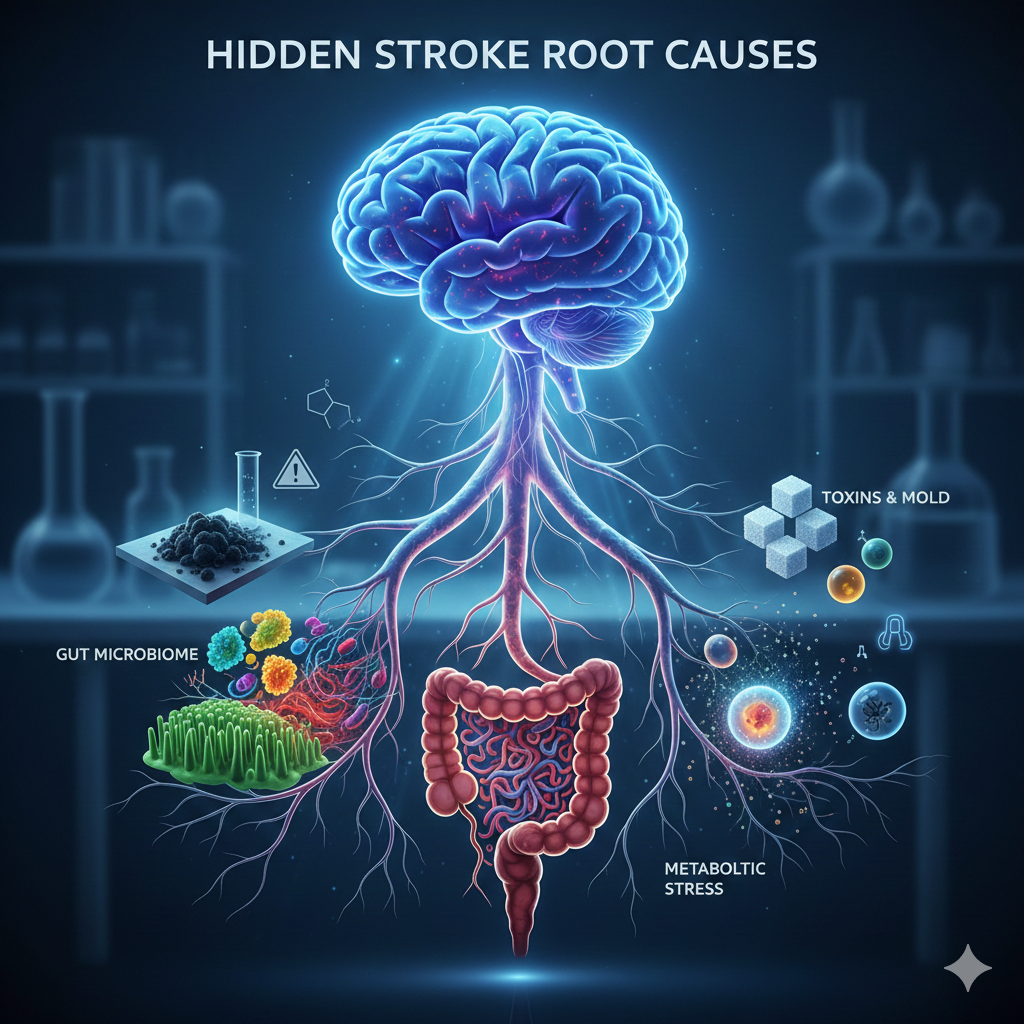
Doug’s functional medicine testing revealed several interconnected problems — each one increasing inflammation, damaging blood vessels, and impairing brain resilience.
Below are the major findings.
1. Low HDL + High Triglycerides: The Dangerous Lipid Pattern That Signals High Stroke Risk
Doug’s advanced lipid panel showed:
- HDL too low — reducing protection against arterial plaque and impairing cholesterol recycling.
- Triglycerides too high — increasing inflammation and blood clotting tendencies.
This pattern is strongly associated with:
- Insulin resistance
- Chronic systemic inflammation
- Mitochondrial dysfunction
- Plaque instability
Even with normal LDL, this lipid pattern significantly increases the risk of both heart attack and stroke. In functional medicine, we recognize it as a hallmark of metabolic stress.
2. Gut Inflammation, Leaky Gut & Microbial Imbalance
Doug’s gut testing revealed:
- Leaky gut (elevated intestinal permeability markers, such as zonulin).
- Inflammatory digestive markers.
- Imbalance of beneficial vs. harmful bacteria (Dysbiosis).
- Immune activation triggered by gut microbes.
- Gluten sensitivity.
Why this mattered: A leaky, inflamed gut allows bacterial components and inflammatory molecules (like LPS) into the bloodstream. This directly increases:
- Systemic inflammation
- Vascular inflammation (endothelitis)
- Clot risk
- Mitochondrial strain
- Blood-brain-barrier disruption
This inflammatory burden played a major role in making Doug’s vascular system vulnerable before the stroke. Research confirms the critical role of gut microbiota and their metabolites in stroke, linking gut health directly to vascular outcomes.
3. Environmental Toxins: Mold & Chemicals Overwhelming Detox Pathways
This was one of the most significant discoveries.
Doug’s toxin screening showed:
- Markers consistent with mold exposure (mycotoxins).
- Chemical toxin load (e.g., from pesticides or solvents) that exceeded his detox capacity.
- Elevated oxidative stress markers.
- Glutathione recycling dysfunction.
- Mitochondrial toxin injury.
These toxins contributed to his stroke by causing:
- A. Chronic inflammation: Blood vessel irritation blood flow disruption.
- B. Mitochondrial injury & low ATP: A damaged brain cannot regulate blood flow effectively or heal itself. This also contributed to Doug’s emotional flatness, cognitive slowing, and limbic dysfunction post-stroke.
- C. Vascular endothelial damage: Toxins weaken the lining of blood vessels, dramatically raising stroke risk.
4. Oxidative Stress and Systemic Inflammation
Doug had elevated markers of:
- Oxidative stress (free radical damage).
- Inflammatory cytokines.
- Endothelial dysfunction.
- Mitochondrial overload.
This high-inflammation environment predisposes the brain and blood vessels to injury.
5. Metabolic & Nutritional Imbalances
Testing found patterns associated with:
- Reduced mitochondrial efficiency (impacting cellular energy).
- Impaired detoxification capacity.
- Nutrient insufficiencies linked to vascular health (e.g., specific B vitamins, magnesium).
- Metabolic stress (blood sugar dysregulation).
Together, these weakened Doug’s cardiovascular stability and slowed his brain’s ability to heal.
Why Doug Had a Stroke: The Root-Cause Summary
Doug didn’t have one single cause — he had a network of interconnected problems:
| Root Cause Category | Specific Finding |
| Metabolic | Dangerous HDL/triglyceride imbalance (Insulin Resistance) |
| Gut Health | Gut inflammation and permeability (Leaky Gut) |
| Toxic Burden | Mold and chemical toxin burden (Mycotoxins) |
| Cellular Health | Systemic oxidative stress and Mitochondrial damage |
| Nutritional | Nutrient insufficiencies affecting vascular function |
All of this created the conditions for a stroke — and impaired his ability to recover afterward.
Doug’s Personalized Treatment Plan: Reversing the Root Causes
Our plan aimed to:
- Lower systemic inflammation.
- Clear environmental toxins.
- Heal the gut lining and balance the microbiome.
- Restore mitochondrial energy production.
- Support detox pathways (especially Phase I and II liver function).
- Improve lipids through targeted nutritional therapy.
- Reduce vascular stress and rebuild brain tissue.
We addressed each root cause systematically, using natural, targeted interventions based on his labs — not guesswork.
HBOT + Red Light Therapy: The Breakthrough Tools That Restored Doug’s Brain
Doug completed:
- 40 Hyperbaric Oxygen Therapy (HBOT) sessions
- Regular Red Light Therapy (RL) sessions
These therapies were pivotal to his neurological recovery.
| Therapy | Primary Mechanism of Action | Benefit for Doug |
| Hyperbaric Oxygen Therapy (HBOT) | Increases dissolved plasma oxygen | Boosts oxygen delivery to injured tissue, repairs mitochondria, activates stem cells, enhances neuroplasticity. |
| Red Light Therapy (RL) | Photobiomodulation via cytochrome c oxidase | Improves circulation, reduces oxidative stress, repairs mitochondrial DNA, enhances neural regrowth and connectivity. |
For Doug, HBOT and RL helped restore limbic function — bringing emotions and personality back online.
The Outcome: Doug Got His Life Back

By the end of his treatment, Doug experienced a dramatic transformation:
- His emotions returned.
- His friendly, chatty personality was back.
- He laughed again.
- His cognition improved significantly.
- He was able to drive.
- He returned to work.
His stroke risk factors were corrected at their root.
This is what functional medicine does best — figure out why disease happens and fix the actual causes.
Can Doug’s Results Help Prevent Another Stroke? Absolutely.
By resolving inflammation, toxins, gut dysfunction, lipid imbalance, and mitochondrial stress, Doug now has:
- Healthier brain tissue
- Stable lipids
- Reduced systemic inflammation
- Better detox capacity
- Stronger vascular health
- Dramatically lower recurrence risk
His recovery wasn’t just about getting better after a stroke — it was about preventing the next one.
Take Control of Your Functional Medicine Stroke Recovery
Doug’s journey shows that post-stroke recovery is more than medications and rehab. By identifying hidden risk factors — including gut health and environmental toxins — and using a personalized, integrative plan, stroke survivors can regain life, personality, and confidence while reducing the risk of a second stroke.
Ready to find the root cause of your or a loved one’s neurological symptoms? If you are a stroke survivor looking for a personalized, functional approach that goes beyond conventional rehab, schedule a consultation today to discuss a Functional Medicine Stroke Recovery plan.
Frequently Asked Questions (FAQ)
Q: Is Hyperbaric Oxygen Therapy (HBOT) a standard treatment for stroke? A: While HBOT is standard for certain acute conditions, it is generally considered an integrative or advanced therapy for post-stroke recovery. We use HBOT as part of a personalized functional medicine plan to enhance neurological healing by reducing inflammation and promoting tissue repair.
Q: Are these stroke root causes (toxins, gut issues) always present? A: No, but they are frequently overlooked drivers of chronic inflammation and vascular damage. We use advanced functional lab testing to identify the unique metabolic, toxic, and microbial imbalances contributing to each patient’s stroke risk and recovery challenge.
Q: How long does a functional medicine recovery plan typically take? A: Recovery timelines are highly personalized. Doug’s plan involved 40 HBOT sessions over several weeks, coupled with several months of targeted nutritional, supplemental, and detox support. We track progress using follow-up lab work and objective neurological assessments.
Q: Can I do functional medicine treatment if I am already taking standard stroke medications? A: Absolutely. Functional medicine is designed to be integrative. We work closely with your current medical team and carefully coordinate all natural interventions to ensure they complement your existing medication and conventional care plan.