

Introduction
Here’s what they don’t tell you in the hospital: Your stroke didn’t just “happen.”
Yes, they’ll stabilize you. They’ll run the CT scan, maybe give you tPA if you’re lucky enough to get there in time, and send you home with a fistful of prescriptions. Blood thinners. Statins. Maybe a beta-blocker. And then what? You’re supposed to hope it doesn’t happen again?
Let me be blunt: Managing symptoms is not the same as fixing the problem.
Your stroke was the end result of a process that’s been building for months, maybe years. And if you don’t address what caused that process—if you don’t reset the underlying systems that failed—you’re just waiting for the next event.
The truth is, most stroke survivors are walking around with their nervous system stuck in overdrive. Their body thinks it’s still in danger. Their stress response never turned off. And that chronic activation is quietly rebuilding the same conditions that caused the stroke in the first place.
This is where limbic system retraining comes in. It’s not some woo-woo mindfulness trend. It’s a systematic approach to resetting the control center of your stress response, calming the inflammation that’s still smoldering in your vessels, and giving your brain the environment it needs to actually heal.
Stay with me here, because what I’m about to show you could be the difference between true recovery and just “getting by.”
And if you’re serious about preventing a second stroke, you need to understand the hidden systems that standard medicine never addresses.
Key Takeaways
- Your nervous system may be stuck in “survival mode” long after your stroke, perpetuating inflammation and vascular damage
- Limbic retraining helps reset the stress response that’s keeping your body in a state of chronic activation
- Vagus nerve stimulation is a critical tool for shifting from “fight-or-flight” to “rest-and-repair”
- Standard stroke care manages symptoms but rarely addresses root causes like gut permeability, chronic infections, or metabolic dysfunction
- Advanced testing reveals the specific triggers keeping your nervous system dysregulated—guessing with supplements won’t cut it
- Virtual functional medicine consulting makes comprehensive testing accessible even if you can’t access therapies like HBOT locally
- Brain retraining exercises combined with targeted interventions can create lasting changes in nervous system function
Estimated reading time: 17 minutes
The Core Problem: Why Your Nervous System Is Still on Fire
Let me paint you a picture of what’s actually happening inside your body right now.
Your stroke was a vascular event—a vessel got blocked or burst. But here’s what standard medicine misses: that vessel didn’t fail in isolation. It failed because your entire system was primed for failure.
And right now? Even after the acute event is over? Your nervous system is still stuck in the state that helped cause the stroke in the first place.
Here’s the Cascade (Stay With Me—This Is Important)
Step 1: Chronic Stress Activates Your Limbic System
Your limbic system is a foundational part of your brain that controls your survival response. When you’re under chronic stress—whether it’s emotional, physical, chemical, or infectious—your limbic system gets stuck in “threat mode.”
Think of it like a smoke alarm that won’t shut off. It keeps screaming “DANGER!” even when the fire is out.
Step 2: Your Stress Response Becomes Your Default State
When your limbic system is chronically activated, it triggers a cascade:
- Your sympathetic nervous system (fight-or-flight) dominates
- Your vagus nerve (the calming brake pedal) gets suppressed
- Cortisol and adrenaline stay elevated
- Your blood vessels stay constricted
- Your blood pressure stays high
- Inflammation becomes chronic
Step 3: Inflammation Damages Your Blood Vessels
Chronic inflammation is like sandpaper scraping the inside of your arteries. Over time, this creates the perfect environment for:
- Plaque formation
- Endothelial dysfunction (your vessel lining stops working properly)
- Blood clots
- Reduced blood flow to critical areas
According to research published by the National Institutes of Health, chronic inflammation is now recognized as a major driver of cardiovascular events, including stroke.
Step 4: The Stroke Happens
A vessel finally gives way. A clot forms. Blood flow stops. Tissue dies.
Step 5: The Nervous System Gets MORE Dysregulated
Here’s the cruel irony: the stroke itself traumatizes your nervous system even further. Your brain has been injured. Your limbic system interprets this as a massive threat. And now your stress response is even MORE stuck.
You’re in a vicious cycle.
The Invisible Fuse
I call this the “invisible fuse” because most people never see it coming. They feel “stressed,” sure. Maybe they’ve had gut issues, sleep problems, brain fog, or chronic fatigue. But they don’t connect the dots between those symptoms and their stroke risk.
And after the stroke? They’re so focused on the immediate damage—the paralysis, the speech problems, the fear—that they don’t realize their nervous system is still primed to do it again.
This is NOT optional to address. If you want real recovery—not just “management”—you have to reset the system that failed.

Doug’s Story: What Testing Actually Reveals
Let me tell you about Doug. (You can read his full story here, but I’ll give you the highlights.)
Doug came to me after a stroke. He’d done everything his doctors told him to do. He was on his medications. He was “managing.” But he wasn’t getting better. He was exhausted, brain-fogged, and terrified it would happen again.
Here’s What Standard Medicine Told Him:
“You had a stroke. Take these pills. Watch your diet. Good luck.”
Here’s What We Found When We Actually Tested:
Advanced Lipid Panel:
- His ApoB was sky-high (a far better predictor of cardiovascular risk than standard cholesterol)
- His LDL particle number was off the charts
- Small, dense LDL particles (the dangerous kind) were dominant
Inflammatory Markers:
- hs-CRP (high-sensitivity C-reactive protein) was elevated—his vessels were still inflamed
- Homocysteine was high, indicating poor methylation and increased clotting risk
Gut and Metabolic Markers:
- TMAO (trimethylamine N-oxide) was elevated—a marker produced by gut bacteria that directly damages vessel walls
- Zonulin was positive, indicating leaky gut (more on this in a second)
Hormone and Stress Markers:
- Cortisol dysregulation—his stress response was completely haywire
- Low DHEA—his body’s ability to buffer stress was depleted
What This Told Us:
Doug’s stroke wasn’t random. His gut was leaking toxins into his bloodstream. Those toxins were triggering chronic inflammation. His stress hormones were stuck in overdrive. His vessels were under constant assault.
And his nervous system? It was the conductor of this entire symphony of dysfunction.
What Changed:
Finally, once we addressed the root causes—sealed his gut, lowered his toxic burden, rebalanced his stress response, and used targeted therapies like hyperbaric oxygen therapy (HBOT) and red light therapy—Doug’s life transformed.
His energy came back. He lost his brain fog. His fear of another stroke? It evaporated because we removed the conditions that caused the first one.
But here’s the key: None of this would have been possible without the testing. We didn’t guess, and we didn’t throw random supplements at him. We measured, we identified, and we targeted.
Functional Medicine Solutions: How We Actually Reset the System
Now let’s talk about what you need to do. Not what Doug did—because your body isn’t Doug’s body—but the framework we use to address nervous system dysregulation and stroke risk.
1. Comprehensive Testing: The Only Way to Be Safe
You cannot fix what you cannot see.
Standard stroke workup looks at:
- Basic cholesterol panel (useless for predicting real risk)
- Blood pressure
- Maybe a carotid ultrasound
We look at:
- Advanced lipid markers (ApoB, LDL-P, small dense LDL)
- Inflammatory markers (hs-CRP, homocysteine, fibrinogen)
- Metabolic markers (fasting insulin, HbA1c, TMAO)
- Gut health markers (zonulin, calprotectin, comprehensive stool analysis)
- Hormone and stress markers (cortisol rhythm, DHEA, sex hormones)
- Nutrient status (vitamin D, B vitamins, magnesium, omega-3 index)
- Genetic markers (MTHFR, ApoE, and other polymorphisms affecting clotting and inflammation)
This testing tells us why your nervous system is dysregulated and what is keeping your inflammation high.
And here’s the good news: I work with patients virtually across the country. You don’t have to be local to get this testing done. We coordinate labs in your area, review results remotely, and design your roadmap together.
2. General Treatment Goals: What We’re Trying to Accomplish
Once we know what we’re dealing with, here are the broad goals (and I’m going to keep this general because I’m NOT going to give you a protocol you can run on your own):
Goal #1: Lower the Toxic Load
We need to reduce the burden on your system. This means:
- Addressing gut permeability (“leaky gut”)—sealing the security fence so toxins stop crossing into your bloodstream
- Reducing exposure to environmental toxins
- Supporting your liver’s detoxification pathways
- Addressing chronic infections (like oral bacteria, gut dysbiosis, or latent viruses)
Goal #2: Calm the Inflammatory Fire
Inflammation isn’t the enemy—chronic, uncontrolled inflammation is. We need to:
- Identify and remove inflammatory triggers (often hidden in food sensitivities, infections, or toxins)
- Support natural anti-inflammatory pathways in the body
- Optimize omega-3 to omega-6 ratios
- Ensure adequate antioxidant status
Goal #3: Reset the Stress Response
This is where limbic retraining and vagus nerve stimulation come in (more on this in a second). The goal is to:
- Shift your nervous system out of chronic sympathetic dominance
- Restore vagal tone (the calming brake pedal)
- Normalize cortisol rhythms
- Improve heart rate variability (a key marker of nervous system resilience)
Goal #4: Optimize Vascular Health
We want your blood vessels to:
- Dilate properly (nitric oxide production)
- Stay free of excessive plaque
- Have healthy, flexible linings (endothelial function)
Goal #5: Support Neuroplasticity and Repair
Your brain can heal, but it needs the right environment:
- Adequate blood flow and oxygenation
- Low inflammation
- Proper nutrient support
- Cellular energy production (mitochondrial function)
3. Limbic Retraining and Nervous System Regulation
Now we get to the heart of this article: actually retraining your limbic system.
The limbic system is highly plastic—meaning it can change. But you have to actively retrain it. It won’t just “calm down” on its own, especially after a major trauma like a stroke.
Here are the mechanisms we target:
Vagus Nerve Stimulation
Your vagus nerve is the main highway of your parasympathetic nervous system—the “rest and digest” response. When vagal tone is low, you’re stuck in fight-or-flight.
Stimulating the vagus nerve helps:
- Lower inflammation (the vagus nerve has direct anti-inflammatory effects via the cholinergic anti-inflammatory pathway—research from the NIH confirms this)
- Slow heart rate and lower blood pressure
- Improve digestion and gut health
- Enhance emotional regulation
Methods include specific breathing exercises, certain body postures, cold exposure, humming/singing, and in some cases, electrical stimulation devices. But the KEY is doing it consistently and in the right context—random cold showers won’t fix a stroke.
Brain Retraining Exercises
These are structured programs (like DNRS, Gupta Program, or specific neuroplasticity protocols) that help rewire the limbic system’s threat response.
Think of it like physical therapy for your brain. Just as you’d do repetitions to strengthen a weakened muscle, you do specific mental exercises to strengthen healthy neural pathways and weaken the dysregulated ones.
Heart Rate Variability (HRV) Training
HRV is a measure of the variation in time between heartbeats. Higher variability = better nervous system resilience.
We use HRV biofeedback to teach your nervous system to shift into a more balanced state. This is measurable and trackable—you can literally see your nervous system improving.
Live in Phoenix, AZ? Get extra HRV help with an Unwind Reset Massage from our Massage Therapist.
Addressing the Underlying Drivers
Here’s the truth: you can do all the breathing exercises and brain retraining in the world, but if your gut is still leaking toxins, if you have an undiagnosed infection, if your cortisol is flatlined—you’re not going to get lasting change.
Limbic retraining works best when it’s combined with addressing the physical root causes. This is why the testing is so critical.
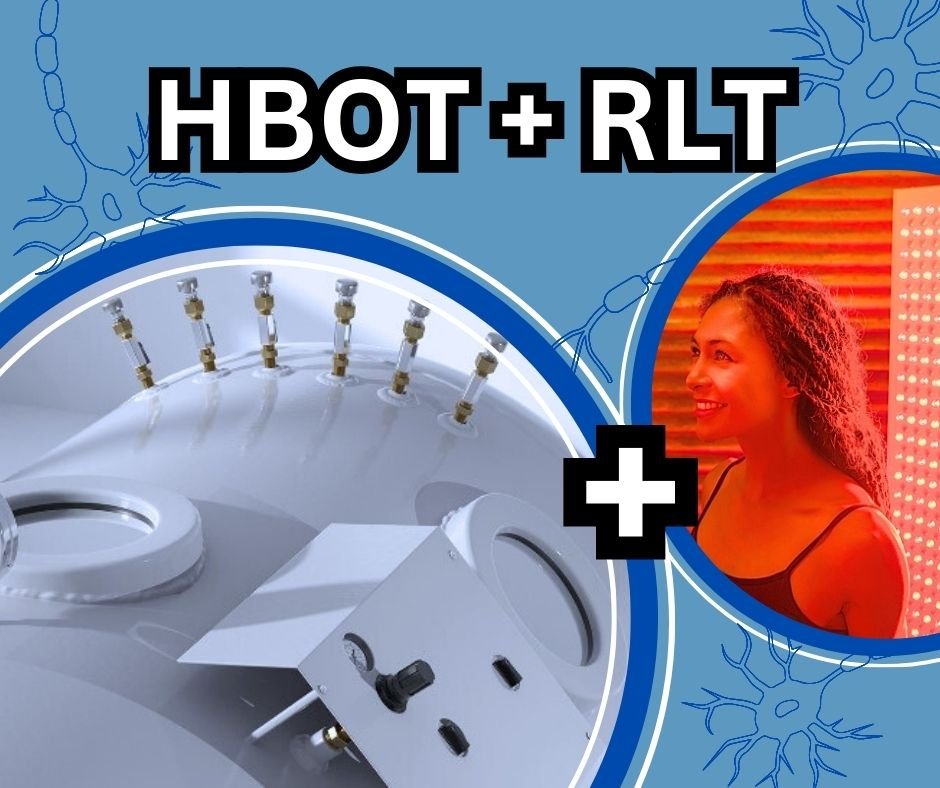
4. Integrative Therapies: HBOT and Red Light Therapy
For my local patients, I have two powerful tools:
Hyperbaric Oxygen Therapy (HBOT)
HBOT delivers high concentrations of oxygen under pressure, which:
- Increases oxygen delivery to damaged brain tissue
- Stimulates stem cell mobilization
- Reduces inflammation
- Promotes new blood vessel formation (angiogenesis)
- Enhances mitochondrial function
For stroke recovery, HBOT can be transformative. We’ve seen patients regain function that standard rehab couldn’t touch. (The CDC acknowledges that stroke is the leading cause of long-term disability—but they don’t tell you about therapies like HBOT that can change the trajectory.)
Important Note: If you’re not local, you can’t access this therapy from my office. BUT—you can absolutely work with me virtually to get the testing, identify your root causes, and create a comprehensive plan. Many patients use the testing and strategic roadmap we create to guide their local care or to prepare for a visit if they can travel.
Red and near-infrared light penetrates tissue and:
- Stimulates mitochondrial energy production
- Reduces oxidative stress
- Enhances cellular repair
- Improves circulation
It’s particularly useful for neurological recovery and reducing chronic inflammation.
Not local to Phoenix? No problem: You can bring red light therapy home with a device from Mito Red Light—the same trusted manufacturer behind our in-office panels.
Mito Red Light devices deliver consistent, research-backed wavelengths and are built for safety, durability, and results. As well, you’ll receive a special discount from our office when ordering through the link below.
👉 Click here to order your at-home red light device
Practical Action Steps: What to Do Right Now
Alright, let’s get tactical. Here’s what you need to do:
Step 1: Demand Advanced Testing
Do NOT accept a basic cholesterol panel and a pat on the back. You need:
- Advanced lipid panel (ApoB, LDL-P)
- Inflammatory markers (hs-CRP, homocysteine)
- Metabolic markers (fasting insulin, HbA1c, TMAO)
- Gut health assessment
- Hormone/stress evaluation
If your current doctor won’t order these, find someone who will. Or work with me virtually—we can coordinate this regardless of where you live.
Step 2: Start Tracking Your Nervous System
Get a wearable device that tracks heart rate variability (HRV). Apps like Elite HRV or devices like Oura Ring or Whoop can give you daily feedback on your nervous system state.
Watch your trends. Are you improving? Getting worse? This data is gold.
Step 3: Remove Obvious Inflammatory Triggers
While you’re waiting for testing, start with the low-hanging fruit:
- Eliminate highly processed foods
- Reduce sugar and refined carbohydrates
- Increase whole, nutrient-dense foods
- Stay hydrated (your blood needs adequate fluidity)
- Prioritize sleep (non-negotiable for nervous system recovery)
Step 4: Begin Basic Vagus Nerve Practices
Simple things you can start today:
- Deep diaphragmatic breathing (5-6 breaths per minute for 5-10 minutes, twice daily)
- Cold water face immersion (30 seconds to activate the dive reflex)
- Humming or singing (vibration stimulates the vagus)
Step 5: Don’t Just Buy Random Supplements
I cannot stress this enough: Do NOT go to the health food store and start loading up on supplements based on what you read online.
Without testing, you’re guessing. And guessing can be dangerous. Some supplements increase clotting risk. Others can interact with your medications. Some are completely wrong for your particular biochemistry.
Get tested first. Know what you need. Then supplement strategically.
Step 6: Find a Qualified Practitioner
Look for someone who:
- Understands functional medicine principles
- Will order comprehensive testing
- Looks at root causes, not just symptoms
- Can coordinate with your neurologist (you don’t have to choose one or the other—integrative care works best)
If you can’t find someone local, reach out to my office. I work with people across the country virtually, and we’ve had tremendous success with remote patients.
FAQ: Your Questions Answered
Q: Can I really reset my nervous system after a stroke, or is the damage permanent?
Let me tell you something important: your brain is far more plastic than you’ve been led to believe. Yes, there’s damage. Yes, some changes may be permanent. But your nervous system has an incredible capacity to reorganize, compensate, and heal—if you give it the right environment.
I’ve seen patients regain function years after their stroke once we addressed the underlying dysregulation. The key is addressing the ROOT causes, not just managing symptoms.
Q: How is this different from the rehab my doctor recommended?
Standard stroke rehab focuses on physical and occupational therapy—retraining movement, speech, daily activities. That’s important. Keep doing it.
What we’re talking about here is addressing the systemic dysfunction that caused the stroke in the first place. We’re resetting the nervous system, calming inflammation, fixing the gut, balancing hormones—the things that standard rehab doesn’t touch.
Think of it this way: rehab teaches you to function better with the body you have. Functional medicine actually changes the body you have.
Q: I’m not local to your office. Can you still help me?
Absolutely. I work with patients virtually across the country. Here’s how it works:
- We coordinate advanced lab testing in your area (most labs are nationwide)
- We review results together via video consultation
- We design your personalized roadmap
- We monitor progress and adjust as needed
The only things you’d miss by not being local are the hands-on therapies like HBOT and red light therapy. But the testing, the strategy, the root-cause investigation—that’s all available remotely.
Q: How long does it take to see results from limbic retraining?
This isn’t a quick fix. True nervous system retraining takes time—usually 3-6 months of consistent practice to see significant shifts.
But here’s what patients typically notice:
- Better sleep within 2-4 weeks
- Improved stress resilience within 4-8 weeks
- Measurable HRV improvements within 2-3 months
- Reduction in symptoms (fatigue, brain fog, anxiety) progressively over 3-6 months
The timeline depends on how deeply dysregulated your system is and how aggressively we address the root causes.
Q: Will this interfere with my medications?
No—and this is critical to understand. We’re NOT asking you to stop your medications. We’re addressing the underlying causes alongside your medical management.
In many cases, as we fix the root causes, your need for certain medications may decrease over time (always under your doctor’s supervision). But we never tell you to stop medications on your own.
Q: What if my conventional neurologist doesn’t “believe in” functional medicine?
You don’t need their permission to get tested. You don’t need their approval to address your gut health, your stress hormones, or your nutrition.
That said, most neurologists are relieved when patients take an active role in their recovery. If you have testing results showing elevated inflammation or metabolic dysfunction, most doctors will acknowledge those are real issues worth addressing.
And remember: you’re not choosing between conventional and functional medicine. You’re integrating both for the best possible outcome.
Q: How much does comprehensive testing cost?
Testing costs vary depending on what we need to investigate, but typically range from $500-$2000 for a comprehensive workup. Some tests may be covered by insurance, others are out-of-pocket.
Here’s how I look at it: you’re investing in finding out exactly what’s going wrong so you can fix it, rather than spending years and thousands of dollars on trial-and-error treatments that don’t address the real problem.
One patient told me, “I spent more on supplements that didn’t work than I did on the testing that showed me what I actually needed.” That’s the reality for most people who try to DIY their recovery.
Conclusion: You Deserve More Than “Management”
Here’s where we are:
You had a stroke. That was a wake-up call—your body was trying to tell you something had been wrong for a long time.
Standard medicine stabilized you. That was critical. But now they’re asking you to “manage” the problem with medications and hope it doesn’t happen again.
That’s not good enough.
You deserve to know why this happened. You deserve to have the actual root causes identified and addressed. You deserve a nervous system that isn’t stuck in threat mode, perpetuating the same inflammation and vascular damage that caused your stroke in the first place.
Limbic system retraining isn’t a magic bullet. It’s one piece of a comprehensive approach that includes:
- Advanced testing to identify your specific triggers
- Addressing gut health, infections, and toxic burden
- Rebalancing stress hormones and nervous system function
- Optimizing vascular health through targeted interventions
- Using therapies like HBOT and red light when appropriate
The patients who do best are the ones who refuse to accept “management” as their only option. They’re the ones who demand answers, get tested, and commit to addressing root causes.
You can be one of them.
If you’re ready to stop guessing and start measuring, if you’re ready to find out what’s really driving your stroke risk, if you’re ready for a personalized stroke recovery program that addresses causes instead of just symptoms—reach out.
I work with people virtually across the country. We’ll coordinate testing, review results together, and create your roadmap. And if you can travel to my office, we have additional tools like HBOT that can accelerate your recovery.
Your nervous system can heal. Your brain can rewire. Your stroke doesn’t have to define the rest of your life.
But you have to take the first step.
Let’s find your invisible fuse—and defuse it—together.

Dr. Darrell Kilcup, DC, CFMP
Owner and Operator, Dr. Kilcup Functional Medicine Center
35 years of experience in chiropractic, functional medicine, HBOT, and red light therapy
References:
- National Institutes of Health: Inflammation and Cardiovascular Disease
- National Institutes of Health: Vagus Nerve Stimulation and Inflammation
- Centers for Disease Control: Stroke Facts
READ MORE – My Related Articles:

 Google 5.0


