
Introduction
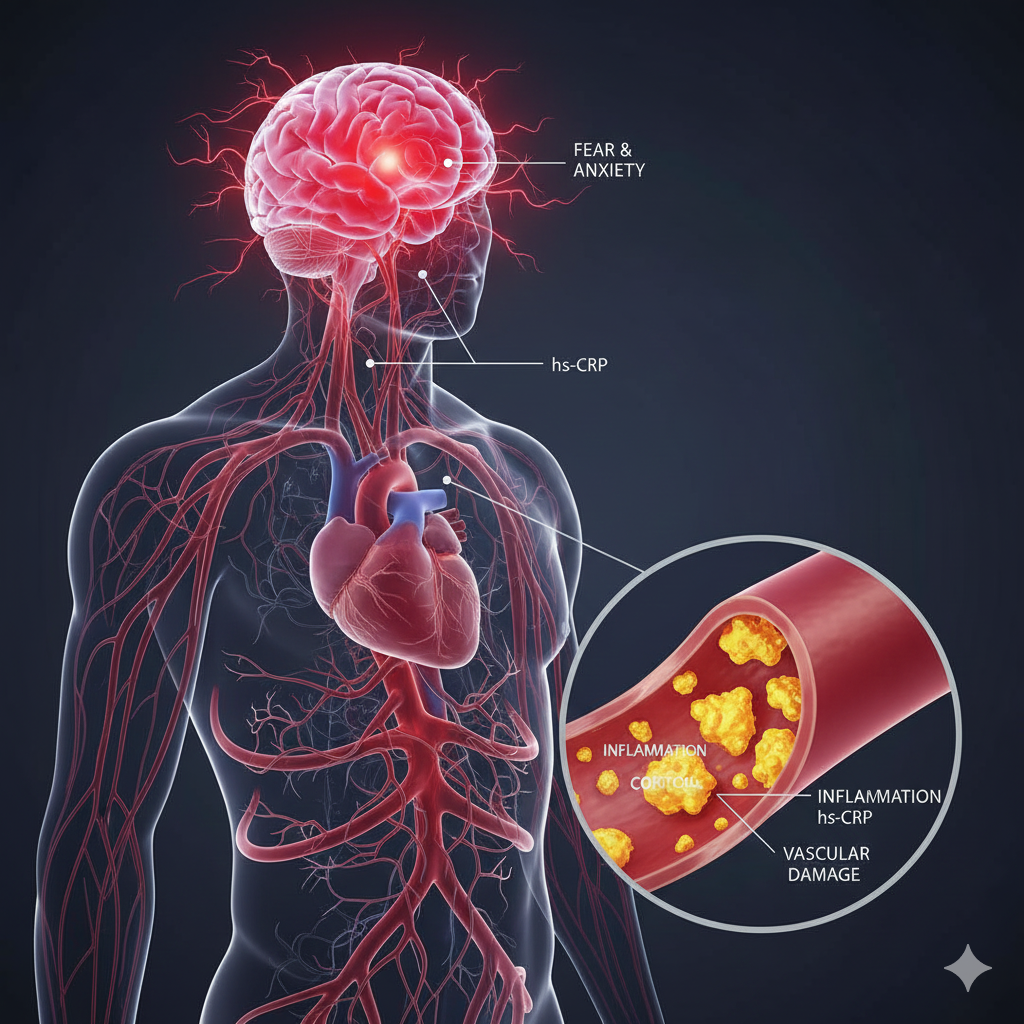
Let me tell you something most doctors won’t: the fear you’re carrying right now—that constant dread of another stroke—isn’t just in your head. It’s in your blood vessels, your hormones, and your nervous system. And yes, it can absolutely increase your risk of a second stroke.
Here’s the truth that nobody wants to say out loud: You survived a stroke, but now you’re living in a state of chronic alarm. Every headache feels like a warning. Every moment of dizziness sends you into a panic. You’re checking your symptoms obsessively, monitoring every sensation, and that hypervigilance? It’s flooding your body with stress hormones that are literally damaging your vascular system.
Standard care will hand you a statin, a blood thinner, and maybe a pat on the back. They’ll tell you to “reduce stress” without giving you a single tool to actually do it. But here’s what they’re missing: the psychological trauma of stroke creates measurable, physical changes in your body that compound your stroke risk. This isn’t about “staying positive.” This is about understanding that post-stroke anxiety, PTSD, and chronic fear activate the exact same inflammatory pathways that caused your first stroke.
Stay with me here because this is important: I work with stroke survivors across the country—virtually—to run the specialized testing that reveals what’s really happening in your body. We identify the hidden markers of vascular inflammation, the hormone disruptions, and the nervous system dysregulation that standard care completely ignores. And then we build a roadmap to actually resolve it, not just manage it.
If you’re serious about preventing a second stroke, you need to understand this connection between trauma and vascular health.
Key Takeaways
- Post-stroke anxiety and PTSD are not just emotional issues—they create measurable vascular damage through elevated cortisol, inflammation, and blood pressure spikes
- Chronic fear keeps your sympathetic nervous system locked in “fight or flight,” preventing your body from healing and repair
- Standard stroke prevention ignores the nervous system entirely, focusing only on cholesterol and blood pressure
- Advanced testing can reveal the hidden markers of stress-induced vascular damage (hs-CRP, cortisol dysregulation, HRV)
- Limbic retraining and vagus nerve stimulation aren’t “wellness trends”—they’re evidence-based interventions that calm the nervous system and reduce stroke risk
- You cannot heal a traumatized nervous system with medication alone; you need a comprehensive approach that addresses the mind-body connection
- Virtual functional medicine testing can identify your specific risk factors, even if you’re not local for in-office therapies
Estimated reading time: 14 minutes
The Hidden Cycle: How Fear Creates Vascular Damage
Let me walk you through what’s happening in your body right now—step by step—so you understand why this matters so much.
Step 1: The Stroke Creates Trauma
When you have a stroke, your brain doesn’t just suffer physical damage. Your entire nervous system experiences trauma. You’ve had a brush with death. Your sense of safety in your own body has been shattered. This isn’t weakness—this is a normal neurological response to a life-threatening event.
Step 2: Your Brain Gets Stuck in Threat Mode
After the stroke, your limbic system—the part of your brain that handles threat detection—goes into overdrive. It’s trying to protect you by staying on high alert. Every sensation becomes suspicious. Your amygdala (your brain’s alarm system) starts firing at things that never bothered you before. You’re scanning for danger constantly.
This is what we call limbic system dysfunction, and it’s incredibly common after stroke.
Step 3: Chronic Stress Hormones Flood Your System
Here’s where it gets dangerous. When your limbic system is stuck in threat mode, your body constantly pumps out stress hormones—primarily cortisol and adrenaline. In the short term, these hormones save your life. But chronically? They destroy your blood vessels.
Let me be blunt: elevated cortisol increases blood pressure, promotes inflammation, raises blood sugar, and directly damages the endothelium (the delicate lining of your arteries). It’s like sandpaper on the inside of your blood vessels.
Step 4: Inflammation Becomes a Smoldering Fire
Those stress hormones trigger inflammatory markers like hs-CRP (high-sensitivity C-reactive protein) and IL-6. Think of inflammation as a smoldering fire in your vascular system. It makes your blood “stickier,” promotes plaque formation, and increases the risk of clots. You’re literally re-creating the conditions that caused your first stroke.
Step 5: Your Vagus Nerve Shuts Down
The vagus nerve is your body’s “brake pedal”—it’s the main nerve of your parasympathetic nervous system, responsible for rest, repair, and healing. When you’re chronically anxious, your vagus nerve activity plummets. We can measure this with heart rate variability (HRV) testing, and in stroke survivors with PTSD, HRV is almost always dangerously low.
Without vagal tone, you can’t shift out of fight-or-flight. Your body never gets the signal that it’s safe to heal.
Step 6: The Cycle Feeds Itself
Now you’re in a vicious cycle: Fear → Stress hormones → Vascular damage → More symptoms → More fear. And the longer this goes on, the higher your risk of a second stroke becomes.
This is NOT optional to address. You cannot medication your way out of a traumatized nervous system.
Doug’s Story: When Testing Revealed the Hidden Damage
Let me tell you about Doug. He came to me six months after his stroke, and he was doing “everything right” according to his doctors. He was on his medications, he’d changed his diet, he was exercising. But he was terrified. He couldn’t sleep. He was having panic attacks. And his follow-up labs? They weren’t improving the way they should.
When we ran comprehensive testing, here’s what we found:
- hs-CRP at 8.2 mg/L (should be under 1.0)—massive inflammation still smoldering
- Cortisol dysregulation—his morning cortisol was sky-high, and his evening cortisol (which should drop) was still elevated
- HRV of 18 ms (healthy is 50+)—his vagus nerve was essentially offline
- ApoB at 147 mg/dL—showing continued vascular risk despite statin therapy
- TMAO elevated—indicating gut dysbiosis contributing to inflammation
Do you see what standard care missed? Doug’s labs looked “okay” on the surface, but the deeper markers showed a body under siege from chronic stress and inflammation.
Here’s what changed his life: We didn’t just throw more pills at him. We addressed the root causes. We worked on calming his limbic system through specific retraining protocols. We supported his gut health to lower inflammation. We used targeted nutrition to support his vascular healing. And for Doug, because he was local, we added hyperbaric oxygen therapy and red light therapy to accelerate tissue repair.
Within four months, Doug’s hs-CRP dropped to 0.8. His HRV climbed to 52. His panic attacks stopped. And most importantly—he felt safe in his body again.
You can read more about Doug’s full journey here.
The key point: We didn’t just manage his symptoms. We found what was driving them and addressed it systematically.
Functional Medicine Solutions: Finding the “Why”
Let me be clear: I’m not going to give you a treatment recipe. That would be reckless. What I’m going to do is show you what comprehensive care looks like and why testing is non-negotiable.
Comprehensive Testing: The Only Way to Be Safe
You cannot guess your way out of stroke risk. You need data. Here’s what we look for:
Vascular Inflammation Markers:
- hs-CRP (high-sensitivity C-reactive protein)
- Myeloperoxidase (MPO)
- Lp-PLA2
These tell us if you have active inflammation damaging your blood vessels right now.
Advanced Lipid Panel:
- ApoB (the most accurate predictor of cardiovascular risk)
- LDL particle number and size
- Lipoprotein(a)
Standard cholesterol tests miss the majority of vascular risk. We need to see the actual number and size of particles that can damage your arteries.
Metabolic & Gut Health:
- TMAO (trimethylamine N-oxide)—reveals gut bacteria producing vascular toxins
- Zonulin—shows if your gut barrier is compromised
- Fasting insulin and HbA1c—metabolic dysfunction drives inflammation
Stress & Nervous System:
- Cortisol (4-point salivary testing)
- DHEA
- Heart Rate Variability (HRV)
These markers show us if your nervous system is stuck in chronic stress mode.
Why This Matters:
According to the CDC, nearly 1 in 4 stroke survivors will have another stroke. But here’s what they don’t tell you: most of those second strokes are preventable if you identify and address the root causes—not just the symptoms.
I work with people virtually across the country to run this testing. You don’t have to be local. We can order these labs through national networks, review the results together via video, and build your personalized roadmap based on what we find.
General Treatment Approaches: Addressing the Root Causes
Once we know what’s driving your risk, we can address it systematically. Here are the general goals—not specific protocols, because those must be individualized:
Calming the Limbic System:
The goal is to retrain your brain’s threat-detection system so it stops seeing danger everywhere. This involves specific neuroplasticity exercises, breathwork, and vagus nerve stimulation techniques. Research published in the Journal of Neuropsychiatry and Clinical Neurosciences shows that limbic retraining can significantly reduce inflammatory markers and improve HRV.
Reducing Vascular Inflammation:
This means identifying and removing the triggers—processed foods, gut infections, environmental toxins, chronic infections—and supporting your body’s natural anti-inflammatory pathways through targeted nutrition. The goal is to lower that hs-CRP and quiet the smoldering fire in your vessels.
Sealing the Gut:
If zonulin or TMAO is elevated, we need to restore gut barrier integrity. A compromised gut allows bacterial endotoxins into your bloodstream, triggering system-wide inflammation. The goal is to heal the gut lining and rebalance your microbiome so it stops producing vascular toxins.
Supporting Nervous System Regulation:
This involves building vagal tone through specific exercises, optimizing sleep (when cortisol should naturally drop), and addressing nutrient deficiencies that impair nervous system function (magnesium, B vitamins, omega-3s).
Integrative Therapies: Accelerating Healing (For Local Patients)
For patients who can come to my office, we have additional tools:
Hyperbaric Oxygen Therapy (HBOT):
HBOT delivers concentrated oxygen under pressure, which penetrates damaged tissue and triggers angiogenesis (new blood vessel formation), reduces inflammation, and supports neuroplasticity. For stroke recovery, it’s profoundly effective at helping the brain repair itself.
Red Light Therapy:
Red and near-infrared light stimulates mitochondrial function, reduces oxidative stress, and promotes vascular healing at the cellular level. It’s particularly effective for reducing chronic inflammation and supporting tissue repair.
Here’s the important part: Even if you’re not local for these therapies, the testing and strategic roadmap can be done entirely virtually. We identify what’s broken, we build the plan, and you implement it with support from your local team or on your own with our guidance.
Practical Action Steps: What You Can Do Right Now
Let me give you specific steps you can take today. But I’m going to be blunt: Do not just buy random supplements and hope for the best. That’s guessing, and guessing gets people killed.
Step 1: Demand Comprehensive Testing
Call your doctor and ask for:
- hs-CRP
- Advanced lipid panel (including ApoB)
- Fasting insulin
- HbA1c
If they refuse or say “it’s not necessary,” find a functional medicine practitioner who will run these tests. Your life is too important to settle for incomplete data.
Step 2: Start Measuring Your HRV
Download a free HRV app (like Elite HRV or HRV4Training) and start tracking your heart rate variability daily. This gives you real-time feedback on your nervous system state. If your HRV is consistently low (under 40), your body is telling you it’s stuck in stress mode.
Step 3: Stop the Obvious Inflammatory Triggers
While you’re waiting for testing:
- Eliminate processed foods, especially refined sugars and seed oils
- Drink at least 8 glasses of clean water daily
- Remove alcohol (it’s a direct vascular toxin and nervous system depressant)
- Prioritize 7-9 hours of sleep
Step 4: Begin Basic Vagus Nerve Stimulation
Simple techniques like:
- Deep diaphragmatic breathing (5 seconds in, 7 seconds out)
- Cold water exposure (30 seconds of cold water on your face)
- Humming or gargling (activates vagal pathways)
These aren’t “woo-woo.” They’re evidence-based ways to activate your parasympathetic nervous system.
Step 5: Address the Mental Component
Find a therapist who specializes in trauma or PTSD, preferably one who uses EMDR or somatic experiencing. Post-stroke anxiety is real trauma, and it needs professional support.
Step 6: Get Expert Guidance
Don’t try to figure this out alone. The stakes are too high. Whether you work with me or another qualified functional medicine practitioner, you need someone who understands the connection between nervous system dysregulation and vascular risk—and who can interpret advanced testing to build your specific roadmap.
WARNING: Do not self-prescribe supplements based on internet research. Supplements can interact with your medications, and the wrong ones can actually increase stroke risk. Get tested first, then work with a professional to determine what you actually need.
Frequently Asked Questions
Q: Is post-stroke anxiety really that common, or am I just being over sensitive?
You’re not too sensitive—you’re normal. Research shows that 25-30% of stroke survivors develop clinical anxiety or PTSD, and many more experience subclinical symptoms. Your nervous system experienced a catastrophic threat. It’s trying to protect you. The problem is when that protection becomes chronic and starts causing harm. The good news? This is treatable when you address it systematically.
Q: Can you really work with me virtually if I’m not local?
Absolutely. I work with stroke survivors across the country every week. We use national lab networks to order your comprehensive testing, we review results via secure video, and we build your personalized roadmap together. The testing and strategy don’t require you to be in my office. The only things that require in-person visits are therapies like HBOT and red light therapy—but those are optional accelerators, not requirements. The foundation is the testing and the strategic plan.
Q: My doctor says my labs are “fine.” Should I still get additional testing?
Let me ask you this: Did your doctor check hs-CRP, ApoB, TMAO, cortisol, or HRV? If not, they’re looking at a tiny fraction of your actual risk. Standard labs miss most vascular inflammation and nervous system dysfunction. “Fine” often just means “not terrible enough to medicate yet.” That’s not the same as “safe” or “optimal.” You deserve better data.
Q: How long does it take to see improvement in anxiety and stroke risk markers?
It depends on how deep the dysfunction goes, but most people start feeling significant improvement in nervous system regulation within 8-12 weeks of targeted intervention. Lab markers often improve within 3-4 months. Doug, the patient I mentioned, saw dramatic changes in 4 months. But here’s the key: you need to address the root causes, not just take random supplements and hope.
Q: Will insurance cover this kind of testing and treatment?
Some testing is covered by insurance, some isn’t. Advanced lipid panels and hs-CRP are often covered. Functional testing like TMAO or comprehensive cortisol panels may not be. The therapies like HBOT might be covered for stroke in some cases, but it’s complicated. Here’s my philosophy: your life is worth investing in. We work to maximize insurance coverage where we can, but I’d rather you pay out-of-pocket for the right testing than get the wrong care for free.
Q: Can’t I just do breathing exercises and meditation on my own?
You can, and you should. But here’s the thing: if your limbic system is deeply dysregulated, if your cortisol is chronically elevated, if your gut is leaking endotoxins into your bloodstream—breathing exercises alone won’t fix it. They’re part of the solution, but you need the full picture. You need testing to know what’s actually broken, and you need a comprehensive approach to fix all the pieces.
Q: What if I’ve already had multiple strokes? Is it too late?
It’s never too late to reduce your risk and improve your quality of life. I’ve worked with patients after their second, third, even fourth strokes who were told there was nothing more to be done. Once we identified and addressed the root causes, their markers improved and their risk dropped. The human body has remarkable capacity to heal when you give it what it needs and remove what’s harming it.
Conclusion: You Can’t Heal What You Don’t Measure
Here’s the bottom line: The fear you’re carrying isn’t just emotional—it’s physiological. It’s creating measurable damage in your vascular system right now. And standard care is ignoring it completely.
You survived your first stroke. That’s incredible. But survival isn’t enough. You deserve to thrive, to feel safe in your body again, to know that you’re doing everything possible to prevent another stroke.
That means getting the right testing. It means understanding the connection between your nervous system and your vascular health. It means addressing the root causes—the inflammation, the gut dysfunction, the hormone dysregulation, the limbic system stuck in overdrive.
I work with stroke survivors across the country—virtually—to run the comprehensive testing that reveals what’s really happening and to build personalized roadmaps based on actual data, not guesswork. Whether you’re local and can benefit from therapies like HBOT, or you’re across the country and we work together remotely, the goal is the same: find the “why” and fix it.
You don’t have to live in fear. You don’t have to accept “management” when resolution is possible.
If you’re ready to take the next step and get a personalized stroke recovery program built around your specific needs, let’s talk.
Your second stroke is not inevitable. But preventing it requires more than hope—it requires data, strategy, and a commitment to root-cause resolution.
Let’s find out what’s really going on in your body and fix it.
Ready to stop guessing and start healing? Schedule your virtual consultation today to discuss comprehensive testing and your personalized roadmap.

 Google 5.0


