
Key Takeaways
- HBOT for stroke recovery and red light therapy offer hope for improving neurological function long after a stroke.
- These therapies enhance brain healing by increasing oxygen delivery, reducing inflammation, and boosting cellular energy.
- Studies show meaningful improvements in cognitive and motor functions with HBOT, even years post-stroke.
- Combining these treatments with functional medicine approaches can optimize recovery results.
- Early intervention is crucial; patients can still benefit from therapies many years after their stroke.
Estimated reading time: 5 minutes
A stroke can feel like life has been put on pause. The brain—your command center for movement, speech, memory, and personality—has been injured, and the standard timeline for recovery often feels painfully slow. However, many are exploring new treatments like HBOT for stroke recovery to potentially accelerate healing.
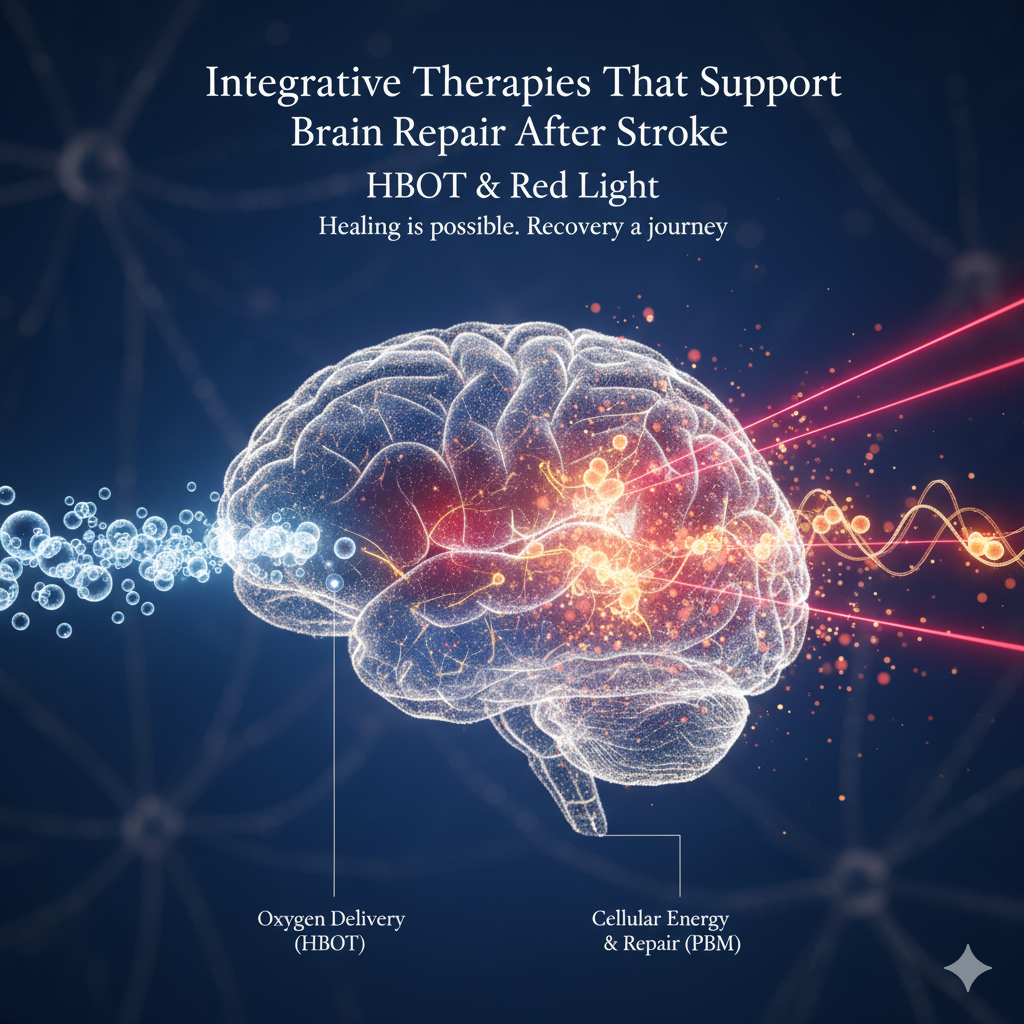
The good news? Emerging integrative therapies, especially Hyperbaric Oxygen Therapy (HBOT) and Photobiomodulation (Red and Near-Infrared Light Therapy), are giving stroke survivors new hope by supporting natural brain repair processes even months or years after the event.
These therapies are not “miracle cures,” but high-quality studies and real-world outcomes show they can improve neurological function when conventional rehabilitation has plateaued.
The Brain’s Remarkable (But Limited) Ability to Heal Itself | HBOT for Stroke Recovery
After a stroke, the core area of brain tissue usually dies within minutes. However, a larger surrounding zone—the penumbra—remains injured but potentially salvageable. Even long after the stroke, the brain continues a slow process called neuroplasticity: forming new connections and recruiting healthy areas to take over lost functions.
The challenge? This natural repair needs three things in abundance:
- Oxygen
- Energy (ATP)
- Reduced inflammation and oxidative stress
This is exactly where HBOT and red light therapy shine.
Hyperbaric Oxygen Therapy (HBOT) for Stroke Recovery
How it works: You breathe 100% oxygen inside a pressurized chamber (typically 1.5–2.4 ATA). This dramatically increases oxygen delivery to oxygen-starved brain tissue.
Evidence:
- A 2020 Cochrane review initially questioned HBOT, but newer randomized trials and meta-analyses (including a 2023 study in Frontiers in Neurology) show significant improvements in neurological scores, daily living activities, and cognitive function when HBOT is started even years post-stroke.
- Researchers at Tel Aviv University documented increased brain activity on SPECT scans after 40–60 HBOT sessions in chronic stroke patients—some more than 10 years post-event.
Typical protocol for stroke survivors: 40–60 sessions (60–90 minutes each), 5 days per week at 2.0 ATA.
Red and Near-Infrared Light Therapy (Photobiomodulation)
How it works: Specific wavelengths (630–670 nm red and 800–850 nm near-infrared) penetrate the skull and reach brain tissue. They:
- Boost mitochondrial ATP production
- Reduce inflammation
- Increase cerebral blood flow
- Stimulate neurogenesis and synaptic growth
Evidence:
- A 2019 pilot study in Photobiomodulation, Photomedicine, and Laser Surgery showed significant gains in motor function and cognition in chronic stroke patients using transcranial LED treatment.
- A 2024 systematic review in Journal of NeuroEngineering and Rehabilitation concluded that PBM is safe and shows moderate-to-large effect sizes on post-stroke disability.
A Real-Life Example: “Mark’s” Journey (names changed)
Mark had a large right-hemisphere stroke at age 58. Six months of traditional therapy left him with left-sided weakness, poor balance, and expressive aphasia. His neurologist said further improvement was unlikely.
His wife discovered HBOT research and found a local center. After 40 sessions combined with daily at-home red light therapy on his scalp, Mark:
- Regained the ability to walk without a cane
- Spoke in full sentences again
- Returned to driving short distances
His neurologist called the progress “remarkable and unexpected.
How Functional Medicine Ties Everything Together | HBOT for Stroke Recovery
At our clinic, we never use HBOT or red light in isolation. We address the underlying drivers that slow healing:
- Advanced inflammatory marker testing (hs-CRP, Lp-PLA2, oxidized LDL)
- Nutrient deficiencies common after stroke (B12, vitamin D, omega-3 index)
- Blood sugar and insulin resistance (even mild elevation impairs brain repair)
- Heavy metal and mold toxicity screening when indicated
- Targeted supplementation
Learn more about this root-cause approach in our comprehensive guide:
How to Prevent a Second Stroke: Functional Medicine Strategies That Work
Key Takeaways & Actionable Tips
- Brain healing is possible even years after stroke—don’t accept “plateau” as final.
- HBOT significantly increases oxygen delivery to dormant brain tissue.
- Red & near-infrared light therapy boosts cellular energy and reduces inflammation.
- Combine integrative therapies with proper nutrition, sleep, and movement for best results.
- Work with a practitioner who understands post-stroke functional medicine testing.
Frequently Asked Questions
Q: Is HBOT covered by insurance for stroke?
A: Medicare and most private insurers do not yet cover off-label HBOT for stroke in the U.S., though coverage is expanding in some countries (Israel, China, Russia).Q: Can I do red light therapy at home?
A: Yes—FDA-cleared transcranial devices are available and safe when used according to guidelines.Q: When is the best time to start these therapies?
A: The sooner the better, but meaningful gains have been documented even 5–20 years post-stroke.Take Your Next Step Toward RecoveryIf you or a loved one is navigating life after stroke, you don’t have to settle for the standard timeline.
Explore personalized stroke recovery options with our team:
→ Schedule a Stroke Recovery Consultation
Your brain is more resilient than you’ve been told. With the right support, meaningful recovery is still possible.
References
- Centers for Disease Control and Prevention – Stroke Facts: https://www.cdc.gov/stroke/facts.htm
- National Institutes of Health – Post-Stroke Rehabilitation: https://www.ninds.nih.gov/health-information/disorders/stroke
- Efrati S, et al. Hyperbaric oxygen therapy induces neuroplasticity even years after stroke. Frontiers in Neurology, 2023.
- Cassano P, et al. Photobiomodulation for stroke recovery: a systematic review. J Neuroeng Rehabil, 2024.

 Google 5.0


